Diwali Indoor Air Quality: 8 Ways to Keep Your Home's Air Cleaner
Diwali brings family gatherings, beautiful lights and plenty of festive cooking. It can also bring extra smoke and fine particles into the spaces where we spend the most time. Diwali indoor air quality deserves attention because outdoor pollution can enter through doors and windows, while indoor activities such as frying, burning incense and lighting multiple candles can add particles of their own.
The good news is that you do not need to give up the celebrations. A few practical habits can help lower exposure while keeping your home welcoming for guests, children and older family members.
Why Indoor Air Quality Matters During Diwali
PM2.5 is small, but significant
PM2.5 refers to airborne particles measuring 2.5 micrometres or less in diameter. These fine particles can come from outdoor smoke and traffic as well as indoor combustion and cooking. The World Health Organization identifies particulate pollution as an important public-health concern, and the US Environmental Protection Agency (EPA) recommends controlling pollution sources, managing ventilation and using effective filtration where needed.
Closing windows helps sometimes—but not always
If fireworks or other smoke have raised outdoor pollution, closing windows and doors can reduce the amount that enters. But a sealed room can still collect particles from cooking or combustion, and carbon dioxide (CO₂) can increase in crowded, poorly ventilated spaces. The right approach depends on what is happening both indoors and outside.
8 Practical Diwali Indoor Air Quality Tips
1. Check outdoor pollution before opening windows
Use a reliable local air-quality update to understand conditions in your neighbourhood. When outdoor smoke or PM2.5 is elevated, keep windows and doors closed as much as practical. Once outdoor air becomes cleaner, ventilate your rooms to dilute pollutants that have built up inside. Outdoor AQI is helpful context, but it does not directly measure the air inside your home.
2. Reduce avoidable smoke at the source
Celebrate with decorative lights and, where appropriate, a limited number of traditional diyas rather than filling enclosed rooms with smoke-producing items. Avoid indoor fireworks, and consider reducing prolonged incense or dhoop burning—especially in small bedrooms. Even pleasant-smelling smoke can contain particles.
3. Control cooking fumes before guests arrive
Festive snacks are part of the occasion, but frying and high-heat cooking can produce airborne particles. Use a kitchen exhaust that vents outdoors when available; keep it running during cooking and briefly afterwards. Keep the kitchen separated from living spaces when practical, and clean up oil residues regularly.
4. Clean dust without throwing it back into the air
Use a damp cloth or mop instead of vigorous dry dusting. A well-maintained vacuum fitted with suitable high-efficiency filtration can help remove settled particles from soft furnishings. Avoid sweeping or spraying strongly scented aerosols just before guests arrive.
5. Use the right air cleaner for fine particles
For smoke-related PM2.5, look for a particle-filtering air cleaner that is appropriate for the room size. Consider the device's clean-air delivery rate (CADR), noise at its useful operating speed and the availability of replacement filters. A purifier supports your air-quality plan; it does not replace reducing smoke at its source.
6. Ventilate when outdoor conditions improve
Fresh outdoor air helps dilute indoor CO₂ and some other indoor pollutants when that outdoor air is cleaner. Ventilation can involve opening windows at suitable times or using a properly designed mechanical system. If outdoor air remains smoky, prioritise reducing indoor emissions and filtering particles until conditions improve.
7. Give bedrooms a low-smoke routine
Avoid lighting incense, candles or multiple diyas inside sleeping rooms. Keep bedding and curtains free from accumulated dust and consider running a correctly sized air cleaner if fine-particle pollution is a concern. A quiet, comfortable setup is more useful than one that is too noisy to leave on.
8. Maintain your air-quality equipment
A clogged filter, poorly placed unit or neglected biological system will not perform as intended. Follow the maker's instructions for placement, cleaning and replacement or refill intervals. If you use an indoor PM2.5 or CO₂ monitor, watch trends over time rather than treating one reading as a complete diagnosis.
Where Does AirX's Living Microalgae Technology Fit?
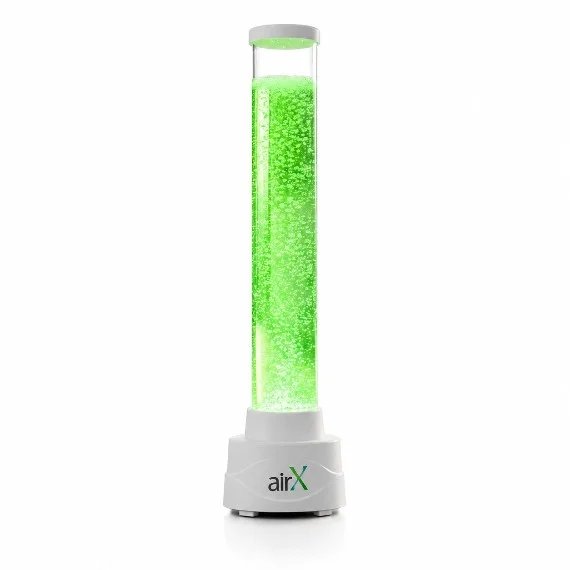
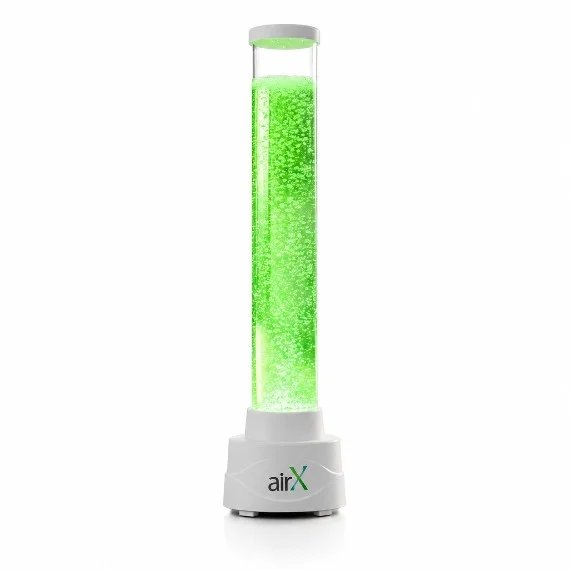
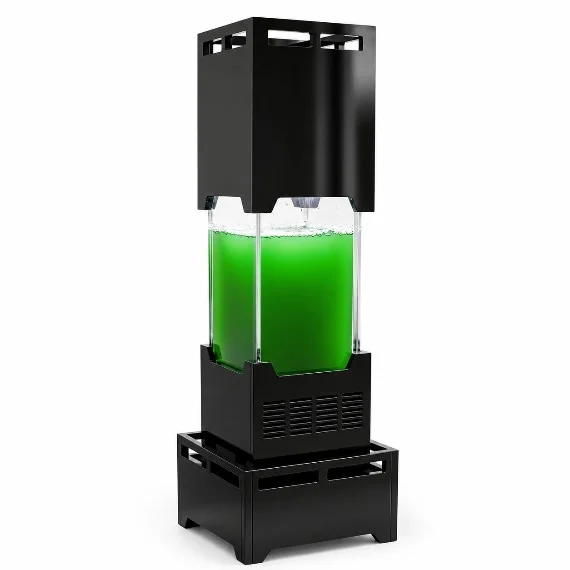
AirX Wellness develops living-microalgae-based indoor air systems. In these systems, illuminated microalgae use light and carbon dioxide during photosynthesis, a process that releases oxygen. AirX describes its O₂ 3L as a living microalgae air purifier and oxygen generator designed for home and office settings.
It is important to distinguish different indoor-air problems. Fine-particle removal, CO₂ management and oxygen generation are not the same function. A device's ability to support one does not establish that it can replace ventilation or independently remove all particles in every room. Compare the exact AirX model's published specifications and test conditions with the size and needs of your space. An AirX system is not a substitute for a medical oxygen concentrator or treatment.
Explore the AirX O₂ 3L living microalgae system or browse AirX Wellness products. For more about CO₂ in workspaces, read Why Indoor CO₂ Is the Silent Productivity Killer.
Match the Solution to the Pollutant
Indoor concernPractical first responseUseful extra measureSmoke and PM2.5Reduce smoke sources and outside-air entry during pollution peaksAppropriately sized particle filtrationElevated CO₂Improve ventilation when outdoor air is suitableTrack trends with a CO₂ monitorCooking particlesExhaust fumes to outdoors where possibleAir cleaning in adjoining areasStrong fragrances and VOCsRemove or reduce the emitting productSuitable ventilation and, where applicable, specialist sorbent filtrationDampness and mouldFix leaks and control moistureClean affected materials safely; seek professional remediation when needed
Frequently Asked Questions
Should I open windows during Diwali?
Not automatically. If smoke and particle pollution are high outside, keeping windows closed can help reduce entry. Ventilate when outdoor conditions improve, while taking care of heat and indoor combustion safety.
Can indoor plants remove PM2.5 from an entire room?
Plants can be beautiful indoor companions, but a few potted plants should not be relied upon as a substitute for adequate ventilation and an appropriately sized particle air cleaner.
Does a HEPA air purifier remove carbon dioxide?
HEPA filtration is designed to capture airborne particles; it does not remove CO₂. Ventilation is generally the principal strategy for managing CO₂ from occupants indoors.
Can a microalgae oxygen generator replace fresh-air ventilation?
No. Photosynthesis and ventilation perform different roles. Use the product according to its documented capabilities and maintain a separate plan for fresh-air exchange and particle control.
Is the outdoor AQI the same as my indoor air quality?
No. Outdoor AQI describes ambient conditions. Indoor air varies with cooking, cleaning, ventilation, filtration and how much outdoor pollution enters the building.
Are air cleaners useful if windows stay closed?
A properly sized particle air cleaner can help reduce airborne particles in the room it serves. Performance depends on the equipment, room size, fan setting, placement and upkeep.
How often should I service my air cleaner?
Follow the manufacturer's schedule for your specific model. For an AirX living-microalgae system, refer to its current refill and cleaning instructions rather than applying the maintenance schedule of a conventional filter purifier.
Celebrate Brightly, Breathe More Thoughtfully
A cleaner home during festival season starts with small decisions: keep smoke-producing activities under control, ventilate when outdoor air is suitable, use effective particle filtration where appropriate and maintain the equipment you choose. For an additional nature-inspired indoor-air technology, explore AirX Wellness and compare the available systems with your room's requirements.
Sources and further reading: US EPA: Improving Indoor Air Quality; US EPA: Sources of Indoor Particulate Matter; US EPA: Air Cleaners and Air Filters in the Home; WHO: Global Air Quality Guidelines.